
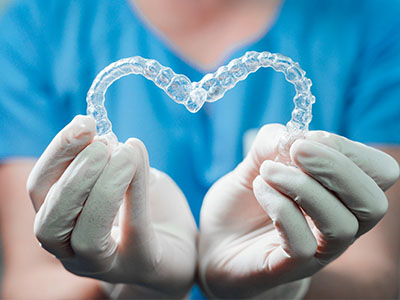
Invisalign® has helped millions of patients achieve straighter, healthier smiles—but it is not the right solution for every person or every orthodontic situation. Determining whether Invisalign® is appropriate for you requires an honest evaluation of your specific dental conditions, the nature of your alignment concerns, your lifestyle and commitment to consistent aligner wear, and what outcome you realistically want to achieve. At Cameron Park Dental Care, we provide straightforward consultations that give you the information needed to make a genuinely informed decision.
Invisalign® works best for patients with healthy teeth and gums, mild to moderate crowding or spacing, common bite discrepancies such as mild overbite or crossbite, and the discipline to wear aligners for the required 20 to 22 hours per day. Patients with realistic expectations—understanding that clear aligners are an orthodontic treatment with specific capabilities and limitations, not a magic solution—tend to have the best experiences. Adults and older teenagers who are self-motivated are typically the strongest candidates.
Complex orthodontic cases involving severe crowding requiring extractions, significant vertical tooth movement, or large skeletal jaw discrepancies may be more predictably addressed with traditional fixed braces or a combination of orthodontics and surgery. Patients with active gum disease or significant bone loss must have these conditions treated before any orthodontic treatment—including Invisalign®—begins. Patients who know they will struggle with consistent aligner wear may achieve better results with braces, which work continuously regardless of compliance.
The most reliable way to determine whether Invisalign® is right for you is to schedule a consultation and have your teeth properly evaluated with records—photographs, X-rays, and a digital scan. This allows us to assess your orthodontic needs accurately, determine whether your case is within the clinical range that Invisalign® handles predictably, and show you a ClinCheck® simulation of the proposed treatment before you commit to anything. We will give you our honest professional opinion about whether Invisalign®, ClearCorrect®, braces, or a referral is the most appropriate path for your situation.
The only way to know for certain whether Invisalign® is right for you is a proper evaluation. Call us at (530) 676-0400 or contact us online to schedule your Invisalign® consultation in Cameron Park—we look forward to helping you find out.
Good Invisalign® candidates have generally healthy teeth and gums, mild to moderate orthodontic concerns (crowding, spacing, common bite discrepancies), and the commitment to wear aligners for 20 to 22 hours per day throughout treatment. Adults and teenagers who are self-motivated and understand the compliance demands of aligner therapy are typically the strongest candidates.
Patients with active dental disease—decay, gum disease, or significant bone loss—need those conditions treated before any orthodontic treatment begins. The only reliable way to assess candidacy is a comprehensive in-person evaluation with appropriate records. We provide this evaluation at the consultation appointment and give our honest professional recommendation based on what the records show.
Invisalign® can address moderate crowding effectively in most cases. Severe crowding—particularly cases requiring tooth extractions to create sufficient space—is more challenging for aligner systems and may be more predictably managed with traditional braces. The clinical management of extraction cases requires precise control of space closure and root angulation that fixed appliances handle with more established predictability than aligners in many situations.
Severe crowding without extractions may still be addressable with Invisalign® in some cases, depending on the anatomy of the jaw and the possibility of using interproximal reduction (minor reshaping of tooth contacts to create space). We evaluate the specific degree and pattern of crowding and provide an honest assessment of whether Invisalign® alone, Invisalign® with extractions, or traditional braces is the most appropriate approach.
Not before the gum disease is treated. Active periodontal infection, inflammation, and bone loss make orthodontic tooth movement significantly more dangerous—forces applied to teeth in compromised bone can accelerate bone loss and may cause rapid, irreversible damage. All active gum disease must be brought under control through appropriate periodontal treatment before any orthodontic treatment begins, whether Invisalign®, braces, or any other system.
Patients with a history of successfully treated gum disease who are in stable periodontal maintenance may be candidates for Invisalign®, provided their disease is well-controlled and they are committed to the regular professional maintenance that keeps it so throughout treatment. A thorough periodontal evaluation is part of the orthodontic consultation for any patient with a history of gum disease.
Yes—retainers are required after all orthodontic treatment, including Invisalign®. Teeth have a natural tendency to drift back toward their pre-treatment positions (relapse), and retainers prevent this from happening. Without retainers, the results of any orthodontic treatment—including Invisalign®—will progressively relapse over time.
Clear retainers similar to Invisalign® aligners are the most common post-treatment option. Fixed retainers bonded behind the front teeth provide additional security and are often recommended for the lower front teeth in particular. Long-term nightly retainer wear is the standard recommendation for maintaining orthodontic results indefinitely.
Invisalign® can address many common bite discrepancies, including mild to moderate overbite, underbite, crossbite, and open bite. The system has expanded its bite correction capabilities significantly through the development of specific aligner features and auxiliaries such as precision bite ramps and elastics worn with aligners. For many patients with common bite problems, Invisalign® can achieve clinically meaningful bite improvement.
Severe bite discrepancies—particularly those with significant skeletal (jaw) components rather than purely dental (tooth) components—may require traditional fixed appliances, orthopedic appliances, or in some cases jaw surgery to correct. A thorough evaluation including appropriate X-rays is needed to determine whether a bite problem is primarily dental (addressable with aligners) or skeletal (requiring other interventions).
At an Invisalign® consultation at Cameron Park Dental Care, we take digital photographs of your teeth and face, perform a comprehensive clinical examination, and take a digital scan of your teeth (no putty impressions needed). We review your dental X-rays to assess root anatomy, bone levels, and overall oral health. These records are used to create your ClinCheck® digital treatment simulation, which shows your teeth moving from their current positions to the planned final positions stage by stage.
We review the ClinCheck® with you at the consultation, discuss the planned treatment and realistic outcomes, provide a detailed cost estimate, and answer all your questions. You leave the consultation with a clear understanding of whether Invisalign® is appropriate for your case, what treatment would involve, how long it would take, and what it would cost—before making any commitment.
Prior dental work—including fillings, crowns, bridges, or implants—does not automatically disqualify a patient from Invisalign®, but it does affect the treatment planning. Teeth with crowns move differently than natural teeth; bridges connect multiple teeth and cannot be moved independently; implants are fused to the bone and cannot be moved orthodontically. These factors are assessed during the consultation and accounted for in the treatment plan.
Extensive prior dental work may limit what Invisalign® can achieve or may require modification of the treatment plan to work around fixed restorations. We review all existing dental work as part of the consultation and factor it into the assessment of Invisalign® candidacy and the proposed treatment plan.
Invisalign® treatment includes refinement aligners—additional aligner stages that can be fabricated after the initial series is complete if the final result does not fully match the planned outcome. Refinements are commonly used to fine-tune tooth positions that were not perfectly achieved in the initial series. Most Invisalign® treatments include some refinement work as a normal part of the process rather than a sign that something went wrong.
Patient satisfaction with the final result is our priority. If there are aspects of your outcome that do not meet your expectations, we discuss them honestly and determine the most appropriate course of action—whether that is additional refinement aligners, retainer modifications, or complementary cosmetic treatments. Open communication about your goals throughout treatment helps ensure the final result aligns with what you were hoping to achieve.
Getting started is simple—call our office at (530) 676-0400 or contact us online to schedule an Invisalign® consultation. At the consultation, we take the necessary records, create your ClinCheck® simulation, and review everything with you in detail. If you decide to proceed, treatment can begin relatively quickly after the consultation—aligners are typically received within a few weeks of ordering.
There is no commitment at the consultation—it is an information-gathering and planning appointment that gives you everything you need to make an informed decision. We welcome your questions and will take the time needed to ensure you feel confident and informed before moving forward.
At Cameron Park Dental Care, Invisalign® consultations are thorough, honest, and patient-centered. We do not push every patient toward Invisalign® regardless of clinical suitability—we evaluate each case individually and recommend the approach that we genuinely believe will produce the best outcome for that specific patient. If Invisalign® is not the right fit, we say so clearly and discuss what alternatives would serve you better.
If Invisalign® is appropriate for your situation, we commit to delivering careful treatment planning, attentive monitoring, and clear communication throughout the process. Call us at (530) 676-0400 or contact us online to schedule your consultation in Cameron Park—we look forward to helping you find out whether Invisalign® is right for you.