
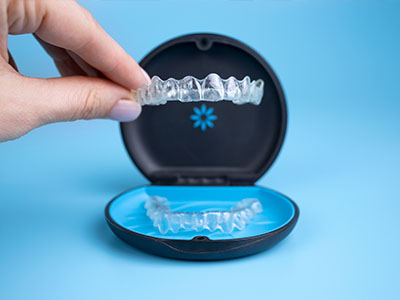
Video is one of the most effective ways to understand how Invisalign® works, what the treatment experience looks like from the patient perspective, and what kinds of results the system can achieve. At Cameron Park Dental Care, we encourage patients who are considering Invisalign® to explore educational and patient experience videos as part of their research, and we supplement this with thorough in-person consultations where we review the digital ClinCheck® simulation of your specific treatment plan before any commitment is made.
Educational videos from Invisalign® illustrate how the aligner system works—showing the progression of tooth movement through a digital model, explaining how SmartForce® attachments enhance the precision of movement, and demonstrating how patients insert and remove the aligners in daily life. Patient testimonial videos share real experiences of treatment from the patient perspective, including what wearing aligners feels like, how they handled meals and social situations, and what their results looked like at completion.
Video demonstrations of the ClinCheck® digital treatment simulation—the 3D model of your specific tooth movement plan—are particularly compelling. This simulation shows your own teeth moving from their current positions to their planned final positions in a rotating 3D view, stage by stage. At your consultation, we display this simulation on screen and walk you through it in detail, which many patients find far more informative than any static image or description.
When watching patient testimonials and before-and-after videos, look for cases with starting points similar to your own concerns. Pay attention to the details of the daily experience patients describe—wearing aligners during work, managing meals and social events, caring for aligners, and how they noticed their teeth changing over time. Real patient experiences are often more informative than promotional content.
The most meaningful “video” you can watch is the ClinCheck® simulation of your own teeth. At Cameron Park Dental Care, this simulation is created from your digital scan at the consultation and reviewed with you before treatment begins. Call us at (530) 676-0400 or contact us online to schedule your Invisalign® consultation and see your own smile transformation simulated on screen.
Invisalign® maintains an official YouTube channel and website (invisalign.com) with extensive educational and patient experience videos covering how the system works, what treatment is like from a patient perspective, and before-and-after case highlights. These are a good starting resource for understanding the fundamentals of clear aligner treatment and what the daily experience looks like.
Patient-generated content on YouTube, Instagram, and TikTok from people who have gone through Invisalign® treatment provides a candid, unsponsored perspective on the daily reality of aligner treatment—including the challenges of compliance, managing social situations, and the progressive results patients notice over time. Both official and patient-generated sources offer valuable perspectives.
The ClinCheck® is a digital 3D simulation of your specific Invisalign® treatment plan. It shows your own teeth—based on the digital scan taken at your appointment—moving from their current positions through each stage of planned movement to the final target position. The simulation can be viewed from multiple angles and played forward and backward to show the full treatment sequence.
Reviewing the ClinCheck® with your provider before treatment begins is one of the most valuable parts of the Invisalign® planning process. It allows you to see exactly what movements are planned, confirm that the planned final result aligns with your goals, and identify any aspects you would like to adjust before the aligners are manufactured. Changes to the plan can be made before fabrication if the simulation does not match your expectations.
Yes—the ClinCheck® simulation is your treatment simulation and you are welcome to share it. Many patients share the simulation video with family members or significant others when making the decision to proceed with treatment. It is a compelling and concrete way to show others what the treatment is expected to achieve for your specific smile.
We can provide you with a version of the simulation to share, or you can view it during your appointment with family members present. We welcome partners, parents, or other trusted people to consultations where major treatment decisions are being discussed—having the support of someone who understands the plan can be valuable as you move forward.
Authenticity varies between sources. Official Invisalign® content features actual patients, though these are often selected for maximum visual impact. Independent patient-generated videos on platforms like YouTube are generally more candid and representative of a wider range of results—including honest accounts of limitations, challenges, and cases that required refinements or were not completely satisfied with the outcome.
For the most relevant assessment of what Invisalign® can achieve for your specific situation, the most meaningful resource is a consultation with your provider, review of your own ClinCheck® simulation, and possibly viewing before-and-after photographs of cases from that practice with similar starting conditions to yours. These individualized resources are more directly applicable than generalized video content.
Many Invisalign® promotional videos showcase the most dramatic transformations, which are not necessarily representative of what every patient experiences. Cases shown in promotional content are typically carefully selected for visual impact. Setting realistic expectations means accounting for the specific extent of alignment work your teeth require, the compliance demands of wearing aligners consistently, and the fact that refinement aligners are commonly needed to fine-tune the final result.
The most accurate prediction of your result is the ClinCheck® simulation created from your own dental records, reviewed and discussed with your provider. This is a case-specific, scientifically planned model of your treatment, not a generalized promotional image. At your consultation, we will show you this simulation and discuss realistic expectations for your specific case.
Time-lapse treatment videos often compress months or years of tooth movement into a 30-second to two-minute sequence, which can create the impression that results happen very quickly. In reality, Invisalign® treatment typically takes 6 to 24 months depending on case complexity, with most average cases running 12 to 18 months. Each aligner stage represents approximately one to two weeks of wear time.
Treatment duration for your specific case is determined by the number of stages in your ClinCheck® plan, which in turn reflects the amount of tooth movement needed. At the consultation, we will provide a realistic timeline estimate based on your individual plan. Compliance with wearing aligners for 20 to 22 hours per day is the primary patient factor that keeps treatment on schedule.
Yes—Invisalign®’s official content and third-party educational channels include videos specifically addressing common orthodontic conditions such as crowding, spacing, overbite, underbite, crossbite, and open bite. These condition-specific videos explain how Invisalign® approaches each type of tooth movement and what the expected scope of treatment typically looks like for each condition.
Searching for condition-specific Invisalign® videos (e.g., “Invisalign for overbite” or “Invisalign for crowded teeth”) on YouTube or the Invisalign® website will produce relevant educational content. Your provider can also point you toward resources most relevant to your specific clinical situation after reviewing your records.
Videos are a great starting point for understanding Invisalign® and building a foundation of knowledge before your consultation. However, they cannot tell you whether you are a suitable candidate, how long your treatment would take, what your specific ClinCheck® would show, or what your treatment would cost. These questions require an actual clinical evaluation with appropriate records.
Come to your consultation with questions prompted by what you have watched and read—this makes the conversation more productive and ensures you get the specific, individualized information that videos cannot provide. We welcome well-informed patients who have done their homework and are ready to have a substantive discussion about their specific situation.
Yes—documenting your own progress through selfie photos or brief video clips is a popular and motivating way to track Invisalign® treatment. Many patients photograph their smile at the start of each new aligner set to create a personal before-and-after record. At your progress appointments, we also take clinical photographs to document your treatment at each stage.
Watching your own teeth gradually align over the course of treatment is one of the most satisfying aspects of the process. Many patients report noticing meaningful changes within the first few months, which reinforces the motivation to maintain consistent aligner wear and progress through the treatment series.
A consultation at Cameron Park Dental Care moves you from watching videos about Invisalign® to seeing your own personalized ClinCheck® simulation—the actual planned movement of your specific teeth from their current positions to their target positions. This is a far more meaningful and motivating experience than any promotional video, because it is about your smile, not someone else’s.
We take the time at the consultation to review your ClinCheck® in detail, answer all your questions, provide a realistic timeline and cost estimate, and discuss your options if clear aligners are not the most appropriate solution for your case. Call us at (530) 676-0400 or contact us online to schedule your consultation in Cameron Park.