
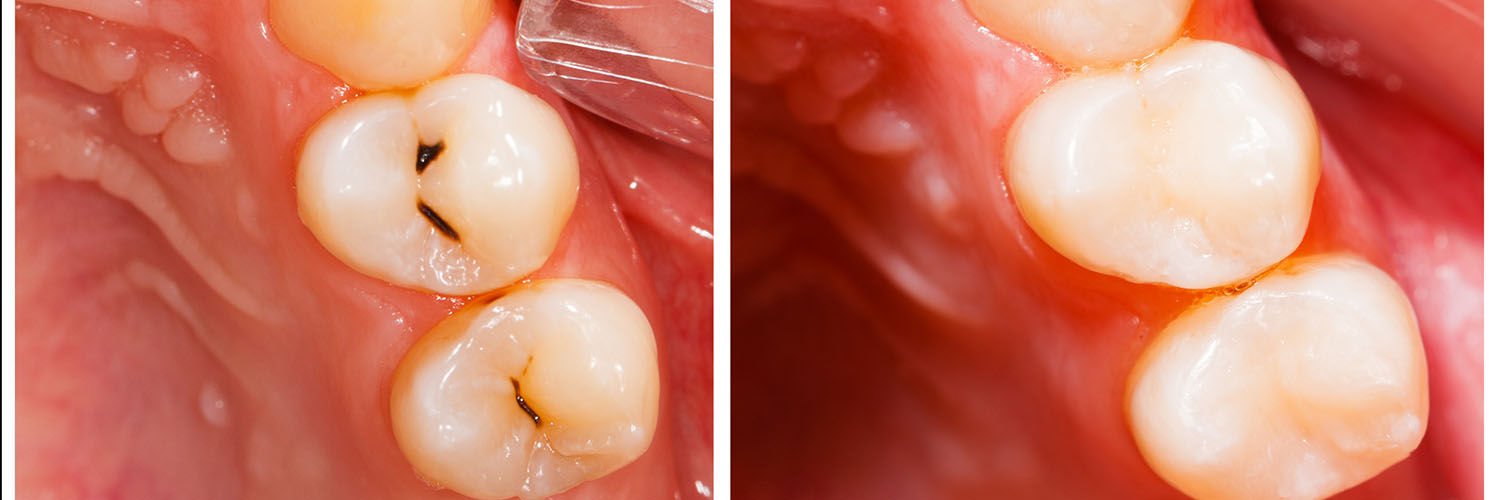
Dental fillings are the most common restorative procedure in dentistry, used to repair teeth that have been damaged by decay, minor fractures, or wear. When decay is removed from a tooth, the resulting space must be filled to restore the tooth’s shape, strength, and function. At Cameron Park Dental Care, we use tooth-colored composite resin fillings that blend seamlessly with natural tooth structure, providing a durable and esthetically pleasing result that looks and feels like the natural tooth.
Composite resin fillings are made from a mixture of glass or quartz particles suspended in a resin matrix. They are applied in layers and hardened with a curing light, bonding directly to the tooth structure. Because they bond to the tooth, composite fillings require less removal of healthy tooth structure than older amalgam fillings, which relied on mechanical retention. The finished filling is polished to a smooth, natural-looking surface.
Composite fillings can be precisely shade-matched to the surrounding tooth, making them virtually invisible once placed. They are an excellent choice for visible front teeth and for back teeth where patients prefer a metal-free restoration. Modern composite materials are durable, stain-resistant, and designed to withstand the chewing forces of normal use.
Placing a filling begins with local anesthesia to ensure comfort during decay removal. The decay is removed using a dental handpiece or, in some cases, air abrasion. The prepared tooth surface is conditioned and a bonding agent applied before the composite resin is placed and shaped. Each layer is cured with the curing light before the next is added. Once the filling is complete, the bite is checked and the filling is polished to a smooth, comfortable finish. Most fillings are completed in a single appointment.
Fillings do not last forever. Over time they can wear, chip, crack, or allow marginal leakage that permits new decay to develop at the edges. At each examination, we assess the condition of all existing fillings. Old silver amalgam fillings may be replaced with tooth-colored composite when they are worn, failing, or when a patient requests a more esthetic alternative.
At Cameron Park Dental Care, we catch cavities early at routine checkups and treat them conservatively, preserving as much healthy tooth structure as possible. If you are due for an examination or have tooth pain or sensitivity, call us at (530) 676-0400 or schedule an appointment online.
Tooth-colored fillings are made from composite resin—a blend of fine glass or quartz particles suspended in a plastic resin matrix. The material is available in a wide range of shades that can be matched to the surrounding tooth color. It bonds directly to the tooth structure through a chemical adhesive process, providing both restoration of the cavity and reinforcement of the remaining tooth.
Modern composite resins have improved significantly in strength, wear resistance, and polish retention, making them suitable for both front and back teeth in most cavity sizes. They do not contain mercury and are free of the metals found in older silver amalgam fillings.
For most clinical situations involving small to moderate cavities, modern composite resin fillings are comparable in durability to amalgam (silver) fillings. Studies show similar longevity for both materials in appropriate applications. Composite bonds to the tooth structure, allowing more conservative removal of healthy tooth structure than amalgam, which required more aggressive cavity preparation for mechanical retention.
For very large cavities or in areas of extremely heavy chewing force, amalgam or other restorations (such as inlays or crowns) may be considered. However, for the vast majority of everyday fillings, tooth-colored composite is an excellent and durable choice that also eliminates the esthetic concerns associated with metal fillings.
The cavity is treated under local anesthesia, so the removal of decay and placement of the filling should not be painful. You will feel pressure and vibration from the handpiece, but not sharp discomfort. Let us know immediately if you feel anything painful—additional anesthetic can be applied as needed.
After the anesthetic wears off, mild sensitivity to temperature or pressure is common for a few days and usually resolves on its own. If sensitivity is significant or persists beyond two weeks, contact us—this can occasionally indicate that the bite needs a minor adjustment or that the filling requires evaluation.
With proper care, composite resin fillings typically last 7 to 10 years, and many last considerably longer. Longevity depends on the size and location of the filling, the patient’s bite and any grinding habits, the quality of home care and professional maintenance, and diet factors such as frequency of acidic or sugary food and beverage consumption.
We monitor all existing fillings at each checkup appointment. When a filling shows signs of wear, marginal breakdown, or associated new decay, we discuss the most appropriate time and approach for replacement to prevent the problem from worsening.
Yes—old silver amalgam fillings can be replaced with tooth-colored composite resin when they are failing, cracked, or have significant decay at the margins. Patients who simply prefer the appearance of a metal-free restoration can also discuss replacement as an elective option. We evaluate each existing filling and recommend replacement when clinical need supports it.
Removing an intact, functional amalgam filling solely for cosmetic reasons involves removing additional tooth structure that was healthy, so we typically recommend replacement when clinical findings support it. We are always happy to discuss your options and the timing of any replacement based on the condition of your existing restorations.
The most effective cavity prevention strategies are consistent daily oral hygiene (brushing twice daily with fluoride toothpaste and flossing once daily), limiting the frequency of sugary and acidic foods and beverages, drinking fluoridated water, using professional fluoride treatments when recommended, and attending regular dental checkups and cleanings. Dental sealants on back teeth provide additional protection for patients at elevated cavity risk.
Catching decay at its earliest stages—often before it has even broken through the enamel surface—through regular X-rays and examinations makes it possible to treat some early lesions with remineralizing fluoride rather than a filling. This is one of the most important reasons to maintain consistent dental care appointments.
Untreated cavities progress deeper into the tooth over time, moving through enamel into dentin and eventually toward the dental pulp (nerve). A small cavity that could be treated with a simple filling may become deep enough to require a root canal or, if the tooth structure is too compromised, an extraction. The bacteria that cause decay also produce acids that soften surrounding enamel, potentially causing the cavity to spread.
Cavities do not resolve on their own—they only get larger without treatment. Treating a cavity early with a small, conservative filling is always preferable to addressing the same tooth after it has progressed to the point of needing more extensive intervention.
Many cavities in their early stages produce no symptoms at all—which is why regular dental examinations and X-rays are essential for detection. As a cavity grows, it may cause sensitivity to sweets, cold, or heat, or a dull ache. A visible dark spot or hole in the tooth is a sign of more advanced decay. Sensitivity that lingers after a stimulus is removed may indicate that the decay has reached close to or into the pulp.
The only reliable way to detect early cavities is through professional examination, including X-rays that show decay between teeth and areas not visible during a visual exam. If you are experiencing tooth sensitivity or pain, contact us—these symptoms warrant prompt evaluation.
Yes—composite resin fillings are used in both primary (baby) teeth and permanent teeth in children. They provide a tooth-colored, metal-free option that is appropriate for most pediatric cavity restorations. The process is the same as for adults, with adjustments for the smaller anatomy of children’s teeth and child-friendly communication to make the experience as comfortable as possible.
Treating cavities in primary teeth is important even though they will eventually be lost—untreated decay in baby teeth can cause pain, infection, and premature tooth loss that affects the spacing of permanent teeth. We also prioritize preventive care for children to minimize the likelihood of cavities developing in the first place.
At Cameron Park Dental Care, we take a conservative approach to cavity treatment, removing only what is necessary and preserving as much healthy tooth structure as possible. We use quality composite resin materials, careful shade matching, and thorough bite verification to ensure every filling is comfortable, durable, and natural-looking from the moment you leave the chair.
Regular checkups at our practice mean we catch decay early—keeping fillings small and treatment simple. Call us at (530) 676-0400 or contact us online to schedule an examination or to address any tooth sensitivity or concern.