
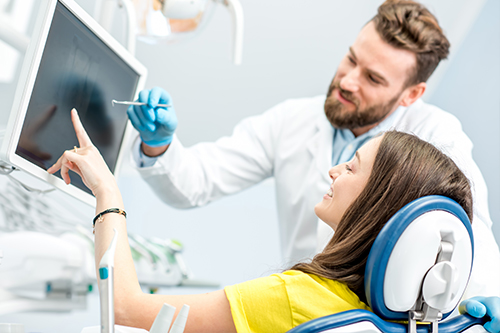
Invisalign® for Teens is a clear aligner orthodontic system designed specifically for the unique needs of teenage patients. It includes all the features of the standard Invisalign® system—custom-fitted clear trays, a staged digital treatment plan, and the convenience of removability—along with specific features engineered to address the practical realities of teen life, including accommodation for still-developing teeth, compliance indicators, and replacement aligners for inevitable losses.
Invisalign® Teen aligners include blue compliance indicator dots that fade from blue to clear with wear, giving parents and clinicians an easy way to assess whether aligners are being worn for the recommended 20 to 22 hours per day. Eruption tabs are built into the aligners to accommodate teeth that are still growing and erupting, allowing treatment to proceed without waiting for full eruption in most cases. The system also includes a set of replacement aligners for each phase—a practical feature given that teenagers have a higher rate of losing or breaking their aligners than adults.
Unlike traditional metal braces, Invisalign® aligners are virtually invisible—a significant consideration for image-conscious teenagers. The aligners are removed for meals, sports, and special occasions, making them far less restrictive than braces. There are no food restrictions, no risk of a bracket coming off at a tournament, and no metal to irritate cheeks during contact sports. Many teens who would have resisted braces are enthusiastic about Invisalign® precisely because it fits into their lives more naturally.
The success of Invisalign® treatment—for teens and adults alike—depends heavily on wearing the aligners for the recommended time each day. For teens, parental engagement in monitoring compliance is important, particularly early in treatment. The compliance indicators provide an objective, visual way to assess wear time without requiring teens to self-report. We discuss compliance and communication strategies with both patients and parents at the start of treatment.
At Cameron Park Dental Care, we enjoy working with teen patients and understand the unique motivations and concerns they bring to orthodontic care. If your teenager is interested in Invisalign®, call us at (530) 676-0400 or contact us online to schedule a consultation.
Invisalign® Teen is a version of the Invisalign® system specifically designed for teenage patients. It includes compliance indicator dots—small blue dots on the aligner that fade to clear with wear, allowing parents and dentists to assess whether the teen is wearing aligners for the recommended 20 to 22 hours per day. Eruption tabs are built into the trays to accommodate teeth that are still erupting, which is common during the teenage years.
Invisalign® Teen also includes six free replacement aligners per treatment, recognizing that teenagers are more likely than adults to lose or damage their trays. These features make Invisalign® Teen specifically adapted to the practical realities of teen patients rather than simply offering the adult product to a younger age group.
Invisalign® Teen is generally appropriate once most or all permanent teeth have erupted, which typically occurs between ages 12 and 14, though this varies by individual. Earlier adolescents with mixed dentition (baby and permanent teeth present) may not yet be suitable candidates for full aligner treatment, though some early limited treatment may be appropriate in specific situations.
The evaluation appointment determines whether the timing is right based on dental development. X-rays allow us to assess the development and position of unerupted teeth and to confirm that the permanent dentition is sufficiently established for planned orthodontic movement.
Invisalign® aligners have minimal impact on most sports and activities. For non-contact activities, they can be worn during participation without any concern. For contact sports where a mouthguard is required, the aligners should be removed and the mouthguard worn instead—a custom mouthguard can be made to fit over the teeth with the aligners out. After the activity, the aligners are replaced after the teeth are rinsed or brushed.
For teens who play instruments—particularly wind instruments—there may be a brief adjustment period, but most musicians adapt quickly. The removability of Invisalign® makes it significantly less disruptive to musical performance, sports, and other activities than fixed braces, which cannot be removed and can interfere with mouthguards and cause oral injury during contact sports.
Compliance indicators are small blue dots located on the outer surface of the Invisalign® Teen aligner. They are made from a special material that gradually fades from blue to clear with exposure to the warmth and saliva of the mouth when the aligner is worn. By the time a new aligner set should be started, the dots should be fully clear or very light if the teen has been wearing the aligners for the recommended 20 to 22 hours per day.
If the dots are still very blue when it is time to switch aligners, this indicates that the aligners have not been worn enough. This gives parents an objective, conversation-starting tool to discuss compliance with their teen and gives clinicians a clinical data point at check-up appointments without relying solely on self-reported wear time.
Losing or damaging an aligner is more common with teens than adults, which is why Invisalign® Teen includes six free replacement aligners per treatment. If an aligner is lost or broken, contact our office promptly. Depending on where the teen is in their series, we may advise wearing the previous aligner until the replacement arrives, moving to the next aligner ahead of schedule, or ordering a replacement. The right course of action depends on the specific stage of treatment and how long the aligner has already been worn.
Repeated loss of aligners can affect the treatment timeline and result in additional costs if replacements beyond the six included are needed. Encouraging responsible care of the aligners—keeping them in the provided case when not worn, cleaning and handling them carefully—helps minimize losses.
Teenagers who are genuinely motivated to improve their smile are the most compliant Invisalign® patients. Before committing to treatment, we encourage parents to have an honest conversation with their teen about why they want straighter teeth and what they are willing to do to achieve it. Patients who chose treatment themselves, rather than feeling it was imposed on them, are significantly more likely to comply with wear requirements.
Practical strategies include building aligner wear into a consistent daily routine, using a reminder app or timer, and tying aligner wear to specific activities (e.g., always wearing them during school and removing only for lunch). The compliance indicators provide neutral, objective feedback that can supplement parental encouragement without becoming a source of conflict.
For most orthodontic conditions in teenagers, Invisalign® Teen achieves results comparable to traditional braces. The key variable is compliance—aligner systems are only as effective as the patient’s commitment to wearing them consistently. Highly motivated teens who wear their aligners as directed achieve excellent results. Teens who frequently remove their aligners or lose them will not achieve the planned outcome on the expected timeline.
For highly complex cases—severe crowding requiring extractions, significant vertical corrections, or complex bite issues—traditional braces or referral to an orthodontist may provide more predictable results. We evaluate each case individually and recommend the approach most likely to achieve the best outcome for each specific teen patient.
The most significant advantages of Invisalign® over braces for teenagers are appearance, removability, and comfort. Clear aligners are virtually invisible, which matters greatly to image-conscious teens who would feel self-conscious wearing metal brackets and wires. Removability allows a completely unrestricted diet and normal brushing and flossing—two significant quality-of-life advantages over braces, which restrict many foods and make oral hygiene more difficult.
Invisalign® also eliminates the emergency appointments that braces patients experience when wires break or brackets come loose. There are no adjustments that cause soreness, no risk of bracket-related oral injuries during sports, and no wires that poke or irritate the cheeks. For many teens and their parents, these practical advantages make Invisalign® the strongly preferred option.
Yes—retainers are required after Invisalign® treatment to maintain the achieved results. Teeth will shift back toward their pre-treatment positions without a retainer holding them in place while the bone and soft tissue stabilize. Clear retainers similar in appearance to Invisalign® aligners are typically provided, and in some cases a fixed retainer bonded behind the front teeth may be recommended for additional security.
Initially, retainers are worn most of the time—transitioning to nighttime wear only as stability is confirmed, usually after three to six months. Long-term nightly retainer wear is the standard recommendation for maintaining results indefinitely. Losing or stopping retainer wear is the most common cause of tooth shifting after orthodontic treatment.
At Cameron Park Dental Care, we work well with teenage patients and appreciate the unique blend of motivation and distraction that characterizes orthodontic care in this age group. We take the time to engage teens as active participants in their own treatment—explaining the process, reviewing their digital treatment simulation, and helping them understand what their commitment to wearing aligners will produce.
We also keep parents informed and involved throughout treatment in a way that supports the teen’s compliance without creating unnecessary conflict. If your teenager is interested in Invisalign®, call us at (530) 676-0400 or contact us online to schedule a consultation in Cameron Park.