
Inlays and onlays are custom-fabricated restorations that repair teeth with moderate to significant decay or damage that is too extensive for a conventional filling but does not require a full crown. They are precision-fitted restorations made in a dental laboratory (or in some cases with chairside CAD/CAM technology) from durable materials such as ceramic, composite resin, or gold. Inlays and onlays are sometimes called indirect fillings because they are fabricated outside the mouth and then bonded into place.
The distinction between an inlay and an onlay is based on how much of the tooth they cover. An inlay fits within the cusps of the tooth, restoring the central portion of the chewing surface without covering the cusps themselves. An onlay extends over one or more of the cusps of the tooth, providing greater coverage when the damage or decay involves the cusp tips or the slopes between cusps. Onlays are sometimes called partial crowns because they cover part of the tooth surface that a full crown would cover.
Inlays and onlays occupy the middle ground between fillings and crowns. They are most appropriate when a tooth has decay or damage too large for a direct filling to restore predictably, but the remaining tooth structure is healthy enough that a full crown—which requires removing more tooth structure—is not yet necessary. This conservative approach preserves as much healthy tooth as possible while providing a strong, durable restoration.
Traditional inlays and onlays require two appointments: one for preparation, impression, and temporization, and one for bonding of the final restoration after laboratory fabrication. With CEREC same-day technology, some inlays and onlays can be completed in a single visit. The bonding process creates a strong, tight seal between the restoration and the remaining tooth, and the completed restoration is smooth, comfortable, and blends naturally with the surrounding enamel.
At Cameron Park Dental Care, inlays and onlays are an important part of our conservative restorative approach. When a tooth needs more than a filling but a full crown is not yet indicated, an inlay or onlay allows us to restore the tooth durably while preserving structure. Call us at (530) 676-0400 or contact us online to learn more.
A filling is a direct restoration placed in a single appointment by adding material directly into the prepared cavity. Inlays and onlays are indirect restorations—they are custom-fabricated outside the mouth (in a lab or with CAD/CAM technology) and then bonded into place. An inlay fills the cavity within the cusps of the tooth. An onlay extends over one or more cusps. Both provide a more precise fit and greater durability than a large direct filling for significant decay.
The choice between a filling, inlay, or onlay depends on the size and location of the cavity or damage. Small cavities are best treated with direct fillings. Moderate to large cavities that compromise but do not destroy the cusps of the tooth are ideal candidates for inlays or onlays, which provide stronger, better-fitting restorations than large direct fillings without the more aggressive tooth preparation required for a full crown.
The most common material for inlays and onlays today is dental ceramic—specifically lithium disilicate or zirconia—which provides excellent strength, durability, and esthetic properties that closely match natural tooth color. Composite resin inlays and onlays are also used, particularly for patients seeking a metal-free, natural-looking option with good esthetic integration.
Gold inlays and onlays remain an option for patients who value maximum durability over esthetics—gold is exceptionally biocompatible and wear-resistant, and gold restorations have a long history of successful clinical performance. The appropriate material is chosen based on the location of the tooth, functional demands, and the patient’s esthetic preferences.
Well-made ceramic or gold inlays and onlays are highly durable restorations. With proper care, they typically last 10 to 30 years, with some lasting even longer. Ceramic inlays and onlays have clinical longevity data comparable to crowns for appropriate indications. Gold restorations are among the most durable in dentistry and often outlast other materials in high-stress locations.
Longevity depends on the material, the location of the tooth, the patient’s bite and any grinding habits, and consistent oral hygiene and professional care. We monitor all restorations at routine appointments and will advise replacement when signs of wear or marginal breakdown are detected.
An onlay and a crown both cover part or all of the chewing surface of a tooth, but they differ in extent. A crown covers the entire visible portion of the tooth above the gumline, requiring more significant removal of tooth structure. An onlay covers one or more cusps but leaves some of the tooth surface uncovered, requiring less tooth reduction. Onlays are sometimes called partial crowns for this reason.
Onlays are a more conservative option than crowns when tooth structure permits it. When damage or decay is so extensive that the remaining tooth structure cannot predictably support an onlay, a full crown provides the necessary protection and strength.
Traditional inlay and onlay placement involves two appointments. At the first, the damaged or decayed tooth structure is removed under local anesthesia, the tooth is prepared to receive the restoration, an impression or digital scan is taken, and a temporary restoration is placed. The impression is sent to a laboratory where the inlay or onlay is custom-fabricated. At the second appointment, the temporary is removed and the final restoration is checked for fit and appearance before being bonded with a strong dental adhesive.
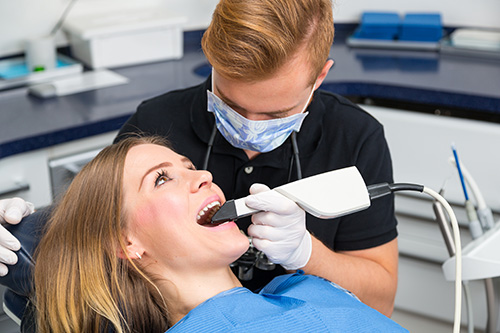
With CEREC chairside CAD/CAM technology, some inlays and onlays can be designed, milled, and placed in a single appointment, eliminating the laboratory fabrication period and the temporary restoration.
Coverage for inlays and onlays varies by insurance plan. Many plans classify them similarly to fillings or crowns depending on the material and extent, and cover them as major restorative procedures at a percentage of the allowed fee. Some plans may apply frequency limitations similar to those for crowns.
We verify your specific benefits before treatment and provide a cost estimate so you know what to expect. If coverage is limited, we discuss options to make the most appropriate treatment accessible within your budget.
For moderate to large cavities, an inlay or onlay provides a stronger, better-fitting, and more durable restoration than a large direct composite filling. Direct fillings have limitations in size—as cavities become larger, it becomes progressively harder to pack and cure composite resin in a way that eliminates voids, achieves adequate contact with adjacent teeth, and bonds reliably to all the prepared surfaces. A large filling is more prone to fracture, marginal breakdown, and wear than an indirect restoration of the same size.
Inlays and onlays are fabricated in controlled laboratory or milling conditions and bonded precisely to the tooth, providing a restoration that fits more accurately and withstands chewing forces more reliably than what can be achieved with a large direct filling placed chairside.
Inlays and onlays require the same daily care as natural teeth—brushing twice daily and flossing once daily. Ceramic inlays and onlays can fracture under extreme force, so avoiding habits like biting on ice, hard candies, or using teeth as tools is important. If you grind your teeth, a night guard helps protect these restorations from premature wear and fracture.
Regular professional cleanings and examinations allow us to monitor the condition of inlays and onlays, check the marginal integrity where the restoration meets the tooth, and detect any changes in surrounding tooth structure or gum health early.
Inlays and onlays are most commonly used on back teeth (premolars and molars) where the biting and grinding forces are greatest and where the restoration must withstand significant mechanical demands. Front teeth rarely have the type of large central cavity for which an inlay is indicated, and other restorative options—such as bonding or veneers—are typically more appropriate for front tooth repair.
In some specific situations involving significant fracture or damage on a back cusp of a front tooth, an onlay-type restoration may be considered. We evaluate each case individually and recommend the restoration that best balances conservation of tooth structure, functional requirements, and esthetic goals.
At Cameron Park Dental Care, we approach restorative care conservatively, always seeking to preserve as much healthy tooth structure as possible. When an inlay or onlay is the right solution—providing more than a filling but less than a crown—we take the time to fabricate it precisely, verify the fit and bite carefully, and bond it in a way that gives the restoration the best possible long-term prognosis.
We also offer CEREC same-day ceramic inlays and onlays for appropriate cases, allowing patients to complete the restoration in a single appointment. To learn whether an inlay or onlay is the right choice for your tooth, call us at (530) 676-0400 or contact us online.